

CRA compliance can feel straightforward until a delivery driver starts earning from multiple apps, mixes personal and business mileage, or overlooks GST/HST registration. Small gaps in records or timing can become costly later, especially when income is inconsistent and expenses are claimed without clear support. Drawing on the practical approach used by Accounting and Tax Services in Canada | CLaTAX, the best way to manage tax obligations is to treat delivery work like a real business from day one: document everything, understand how the CRA classifies your income, and file with discipline.
What the CRA expects from a delivery driver
The first issue is classification. Some drivers are employees, while others are independent contractors or sole proprietors. The difference matters because it affects what must be reported, which expenses may be deducted, and whether CPP contributions, GST/HST obligations, and instalments apply. If you work through a platform, do not assume the platform’s labels tell the whole story. The CRA looks at the facts of the relationship, including control, ownership of tools, chance of profit, and risk of loss.
For the self-employed delivery driver, income is generally reported on a T1 personal return using business or professional income schedules. That means gross earnings should be reported even if a platform has already deducted certain fees. Payout summaries are useful, but they are not a substitute for full books and records. If you receive slips such as a T4A or other annual statements, those numbers should align with your own records rather than replace them.
It is also important to separate tax concepts that are often confused. Income tax, CPP contributions for the self-employed, and GST/HST are not the same obligation. A driver may have to deal with one, two, or all three depending on the level and structure of income. When the basics are not clear, filing errors tend to multiply year after year.
Record-keeping rules every delivery driver should follow
Good records are the foundation of CRA compliance. If you cannot prove an expense, the claim may not survive a review. If you cannot explain how you calculated business-use percentages, deductions that seemed reasonable may be reduced or denied. The CRA does not just want totals; it wants support.
At a minimum, a driver should keep contemporaneous records for income, expenses, and mileage. Contemporaneous means recorded as the activity happens or very close to it, not reconstructed from memory months later. That single habit often makes the difference between a clean filing and a stressful tax season.
- Income records: weekly or monthly platform statements, bank deposits, cash tips where applicable, and year-end tax slips.
- Vehicle records: total kilometres driven during the year, business kilometres, fuel receipts, repairs, insurance, registration, and loan interest or lease documents where relevant.
- Operating costs: phone bills, insulated bags or equipment, accounting fees, and supplies used for work.
- Home office support: utility bills, rent or mortgage interest information, and a clear method for calculating the workspace percentage if a claim is appropriate.
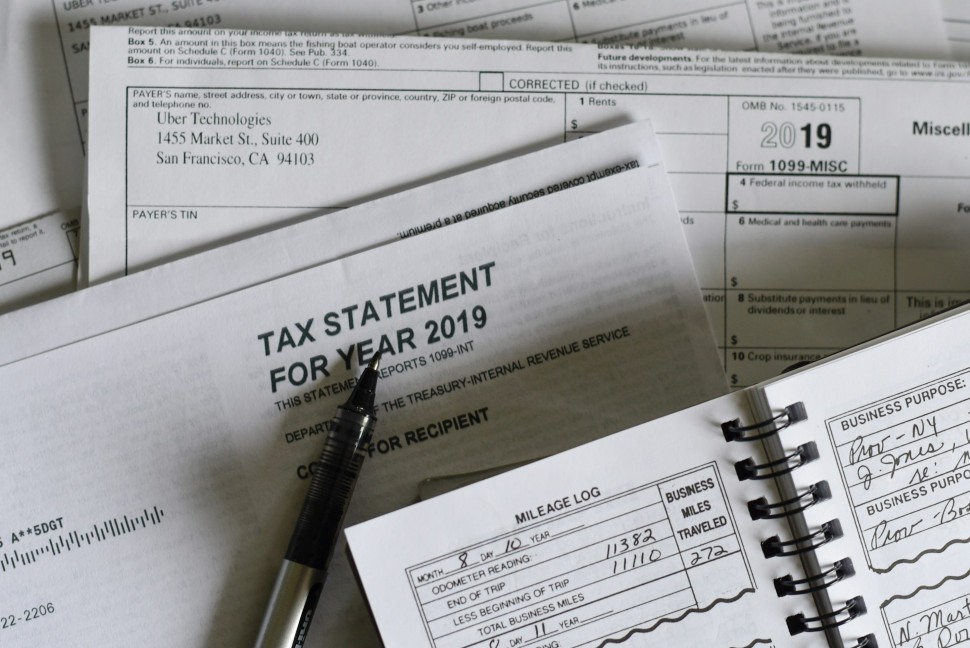
A mileage log deserves special attention. Estimating business use at tax time is one of the most common weak points in a driver return. The log should show date, destination, purpose of trip, and kilometres driven. If the vehicle is used for both personal and business reasons, the annual business-use percentage should be based on records, not rough intuition.
| Record | Why it matters | Best practice |
|---|---|---|
| Platform earnings statements | Support gross income and platform fees | Download and save monthly, not just at year-end |
| Mileage log | Supports vehicle expense allocation | Track trips throughout the year |
| Receipts and invoices | Substantiate deductions claimed | Store digital copies in dated folders |
| Bank and credit card statements | Corroborate payments and business activity | Use a separate account where possible |
Claiming deductions without overreaching
Many legitimate deductions are available to self-employed drivers, but claims should be proportional, supportable, and tied to income-earning activity. Overclaiming is not only risky; it can also weaken the credibility of the entire return if the CRA asks questions later.
Vehicle costs are usually the largest category. These may include fuel, maintenance, insurance, licensing, lease costs, eligible loan interest, parking related to work, and depreciation through capital cost allowance where appropriate. The key point is that only the business portion is deductible unless the vehicle is used exclusively for work, which is uncommon for many individuals.
Other deductions may include a reasonable share of cell phone costs, delivery equipment, bookkeeping or tax preparation fees, and certain home office expenses if the space is used to manage the business on a regular basis. However, personal living costs, ordinary commuting, and unsupported cash spending should not be treated as business deductions simply because the work is done on the road.
A helpful discipline is to sort expenses into three groups:
- Clearly business: items used directly and exclusively for delivery work.
- Mixed-use: costs that require a documented business-use percentage, such as vehicle and phone expenses.
- Personal: items that should stay off the return.
This structure keeps the filing grounded and makes year-end review more efficient. It also reduces the temptation to stretch borderline expenses into deductions that will be difficult to defend.
GST/HST, instalments, and filing deadlines
Income tax filing is only part of the compliance picture. A delivery driver who earns business income may also need to consider GST/HST registration. Whether registration is required depends on the nature of the supplies and whether the small supplier threshold has been exceeded. Because platform-based work can blur the lines between different types of services, this area deserves careful attention rather than guesswork.
Once registered, the obligation is ongoing: charge GST/HST where applicable, file returns on time, and keep proper records for input tax credits. Registering late can create avoidable complications, especially if tax should have been collected earlier. On the other hand, registering without understanding the rules can also create unnecessary administrative work. The right answer depends on the facts.
Instalments are another surprise for many self-employed workers. If tax owing reaches the CRA threshold, quarterly instalment payments may be expected in future years. Missing them can lead to interest and, in some cases, instalment penalties. This is why successful tax planning for drivers is not just about what happens in April; it is about setting aside money throughout the year.
To stay ahead, use a simple compliance calendar:
- Set a monthly date to download platform reports and reconcile income.
- Review mileage and expense records at the end of each month.
- Reserve a percentage of each payout for tax obligations.
- Check GST/HST status before the threshold becomes an urgent issue.
- Confirm filing and payment deadlines well before year-end.
How to stay audit-ready and when to get professional support
Being audit-ready does not mean expecting a dispute with the CRA. It means keeping your records in a form that makes your return easy to explain. A clean audit trail should show how income was earned, how expenses were calculated, and why each claim is reasonable. If numbers on slips, statements, and bank records do not match, resolve the difference before filing rather than hoping it will not matter.
A practical year-end review should cover the following points:
- Confirm that gross income matches platform statements, slips, and deposits.
- Verify that vehicle expenses are allocated using a documented business-use percentage.
- Check that mixed-use expenses, such as phone and home office, are calculated reasonably.
- Review whether GST/HST registration or filings are required.
- Set aside funds for any balance owing and future instalments.
This is also where professional advice adds real value. Accounting and Tax Services in Canada | CLaTAX can help drivers interpret classification issues, review deduction methodology, and identify compliance gaps before they become expensive corrections. That is especially helpful for people juggling multiple platforms, irregular income streams, or prior-year filings that may need attention.
For many independent workers, the biggest mistake is waiting until tax season to understand their obligations. CRA compliance is easier when it is built into the routine of the business, not treated as an annual emergency.
In the end, strong tax compliance is less about complexity than consistency. A delivery driver who keeps reliable records, separates personal and business spending, watches GST/HST exposure, and plans for tax payments is in a far stronger position than someone trying to reconstruct a year from memory. With disciplined habits and timely guidance from CLaTAX when needed, CRA requirements become manageable, defensible, and far less stressful.
Find out more at
Cloud Accounting & Tax Services Inc. | CLaTAX
https://www.claccounting-tax.ca/
+1 (855) 915-2931, +1 (236) 521-0134
Cloud Accounting & Tax Services Inc. | CLaTAX is a Canada-based accounting and tax advisory firm providing professional services to individuals, self-employed professionals, small businesses, and corporations. Our services include personal and corporate tax filing, bookkeeping, payroll, GST/HST compliance, financial statement preparation, and CRA support. Based in Burnaby, British Columbia, we serve clients across Canada through secure cloud-based systems and personalized consultations. Our team is committed to accuracy, transparency, and compliance, helping clients stay financially organized, meet regulatory requirements, and make informed financial decisions.
